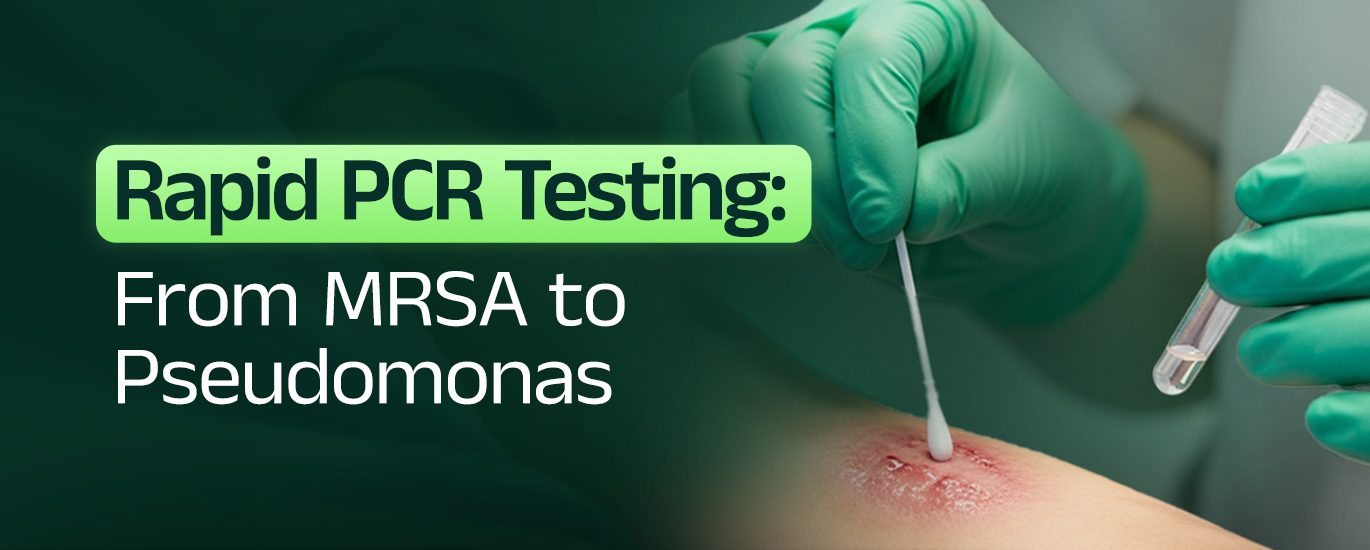
A wound that doesn’t heal often signals something deeper than just a surface injury. Hidden bacterial or fungal infections are one of the leading reasons why wounds remain stubbornly open and resistant to treatment. Traditionally, doctors relied on culture-based methods to detect these infections, which often took several days and sometimes missed slow-growing or hard-to-culture pathogens.
This is where Devansh Lab Werks (DLW) rapid wound PCR test steps in. By leveraging advanced molecular diagnostics, DLW delivers a comprehensive wound PCR report within hours, helping clinicians identify the exact pathogens slowing down wound healing, from MRSA to Pseudomonas and beyond. But once you have this report in hand, how do you interpret it? Let’s break it down step by step now.
What does the DLW wound PCR test do?
The DLW wound PCR test is designed to give clinicians a clear picture of what’s really happening inside a non-healing wound. Instead of waiting days for cultures, this test detects the DNA of multiple pathogens simultaneously, including bacteria, fungi, and resistance genes.
Key advantages of DLW wound PCR:
- Speed: Results in hours, not days
- Accuracy: Identifies both common and uncommon pathogens missed by cultures
- Resistance detection: Highlights genetic markers of antibiotic resistance (like MRSA)
- Comprehensive coverage: Detects polymicrobial infections that may require combined therapy
How to read your wound PCR report?
When you first look at your wound PCR report, it may feel overwhelming. But each section is carefully structured to help clinicians make faster, more informed treatment decisions.
Here’s a complete list of what you’ll typically see:
1. Pathogen identification
This section lists the bacteria or fungi detected. For example, you might see:
- Staphylococcus aureus (MRSA detected)
- Pseudomonas aeruginosa (high load)
- Candida albicans (trace levels)
Each organism is classified by its clinical relevance, whether it is a major infection driver or a background colonizer.
2. Relative abundance
The report doesn’t just name pathogens, it also shows their quantity (high, medium, low load). This helps doctors prioritize which organism is the main culprit in delaying wound healing.
3. Resistance genes
A major benefit of PCR wound testing is its ability to detect antibiotic resistance genes. For example, your report may flag:
- mecA gene detected → MRSA (methicillin-resistant Staph aureus)
- blaCTX-M gene detected → ESBL-producing bacteria
This gives your physician immediate insights on which antibiotics won’t work, saving precious time.
Common pathogens decoded: From MRSA to Pseudomonas
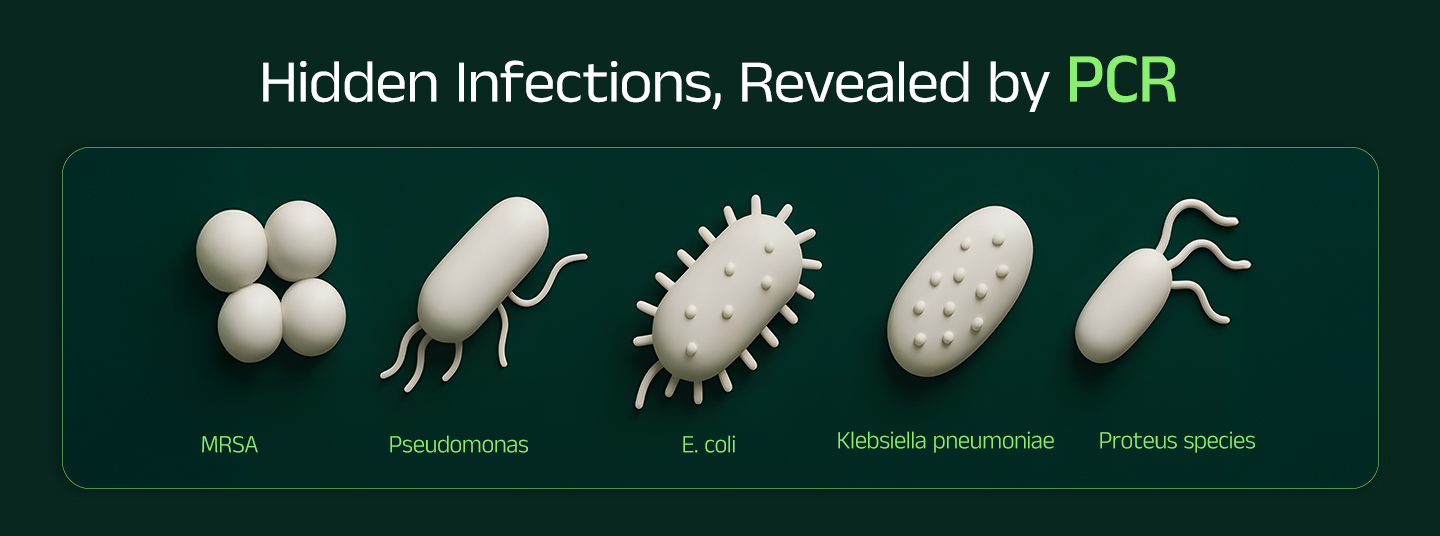
Your wound PCR interpretation often includes some well-known culprits. Let’s look at the top pathogens you may see in your report.
MRSA (Methicillin-resistant Staphylococcus aureus)
A superbug that resists many common antibiotics. MRSA is notorious in wound infections because it can quickly spread and complicate healing.
- What the report shows: MRSA detection + mecA resistance gene.
- Why it matters: Requires targeted antibiotics like vancomycin or linezolid instead of routine penicillins.
MSSA (Methicillin-sensitive Staphylococcus aureus)
The “regular” form of staph that can still cause painful wound infections.
- What the report shows: Detected without resistance markers.
- Why it matters: Usually treatable with standard antibiotics.
Pseudomonas aeruginosa
A highly aggressive bacterium found in chronic wounds and burns. Known for forming biofilms, which protect it from treatment.
- What the report shows: Often reported in high loads.
- Why it matters: Requires specific antibiotics (e.g., piperacillin-tazobactam) and careful monitoring.
Enterococcus species
Can be harmless in small numbers but problematic in immunocompromised patients.
- What the report shows: Sometimes paired with resistance genes like vanA (VRE).
- Why it matters: Vancomycin-resistant Enterococcus is hard to treat.
Escherichia coli (E. coli)
Common in gut flora but concerning when found in wounds.
- What the report shows: High or moderate abundance with possible ESBL genes.
- Why it matters: Can prolong infection and delay closure.
Klebsiella pneumoniae
An opportunistic pathogen linked to hospital-acquired wound infections.
- What the report shows: Detected with or without resistance markers.
- Why it matters: Can carry multiple resistance genes.
Proteus species
Often cause foul-smelling wounds and are associated with delayed healing.
- What the report shows: Presence + relative load.
- Why it matters: May require tailored therapy.
Anaerobes (e.g., Bacteroides)
Detected in deep wounds with poor oxygenation.
- What the report shows: Often appear in mixed infections.
- Why it matters: May not grow in traditional cultures but contribute heavily to chronic infections.
Fungal pathogens (Candida, Aspergillus)
Sometimes detected in long-standing, non-healing wounds.
- What the report shows: Trace or significant levels.
- Why it matters: Fungal elements slow healing and may require antifungals.
Polymicrobial combinations
Many non-healing wounds are not caused by one bug alone. Your report may show multiple organisms.
- Why it matters: Treatment may need a combination of antibiotics/antifungals.
Why DLW wound PCR test interpretation matters
Getting your DLW wound PCR report is only the beginning. The true impact lies in how doctors interpret the findings. DLW’s advanced reporting doesn’t just detect pathogens – it provides actionable insights that guide treatment and speed up recovery.
- Pinpointing the infection source: DLW uses molecular-level detection to identify the exact organisms present in a wound, including those missed by traditional cultures. With interpretation, physicians can quickly connect symptoms with the actual pathogen, saving critical time in diagnosis.
- Avoiding trial-and-error treatment: Instead of relying on broad-spectrum antibiotics, DLW reports give doctors the clarity they need to avoid trial-and-error prescribing. This means treatment begins on the right path from day one, reducing unnecessary medication and side effects.
- Choosing precise antibiotics: DLW reports also highlight antibiotic sensitivity and resistance markers, allowing doctors to prescribe the most effective drug with confidence. This not only helps the wound heal faster but also reduces the risk of antibiotic misuse.
- Detecting resistance early: One of DLW’s strengths is its ability to detect resistance genes even before complications arise. Early interpretation helps physicians take preventive action, stopping infections from worsening or spreading.
Conclusion
A wound that refuses to heal can be frustrating, painful, and dangerous. Thanks to innovations like the Devansh Lab Werks rapid wound PCR test, patients and doctors now have access to fast, detailed reports that reveal exactly what’s happening inside the wound. From MRSA to Pseudomonas, these line-by-line results help guide treatment with accuracy, speed, and confidence.
If your wound still isn’t healing, a DLW wound PCR report could be the missing link that finally unlocks recovery.